
 Your current location >> Press Release
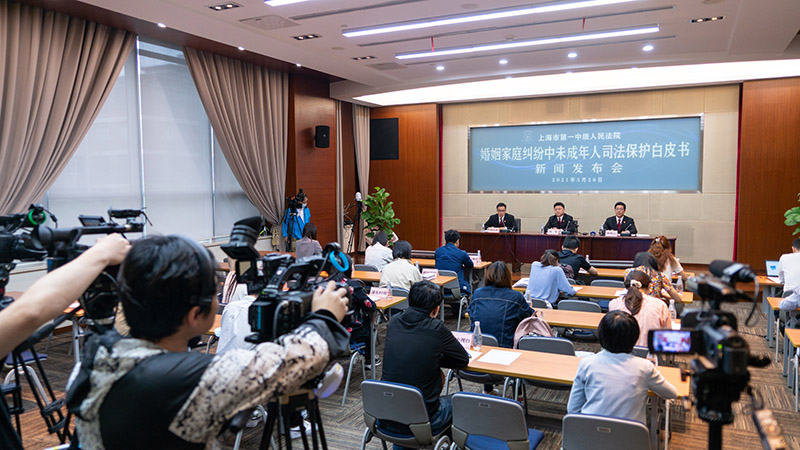
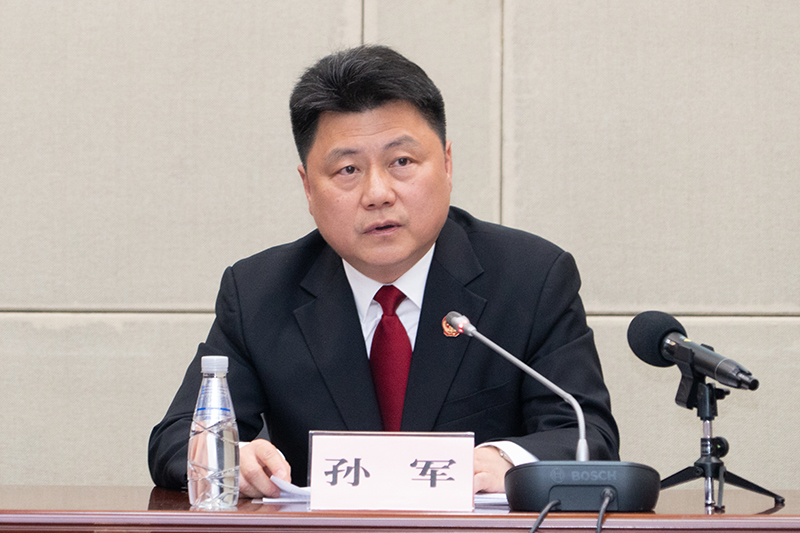
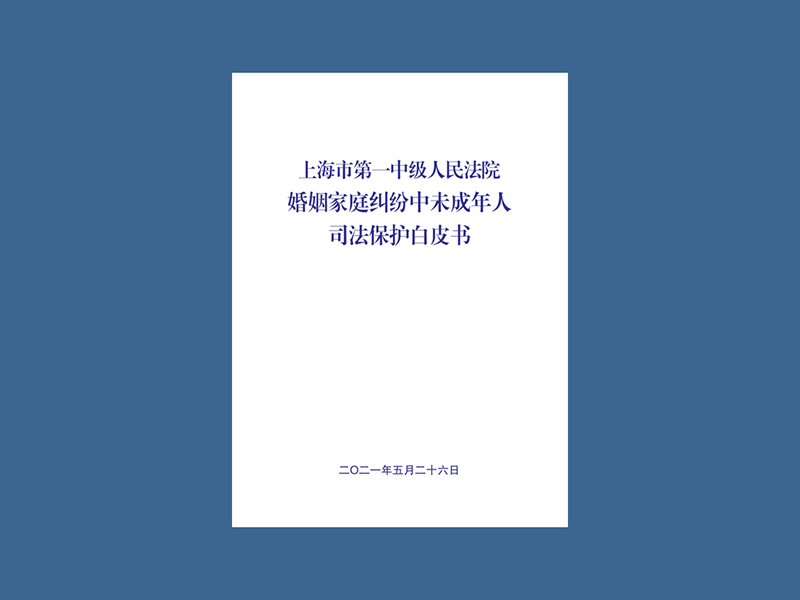
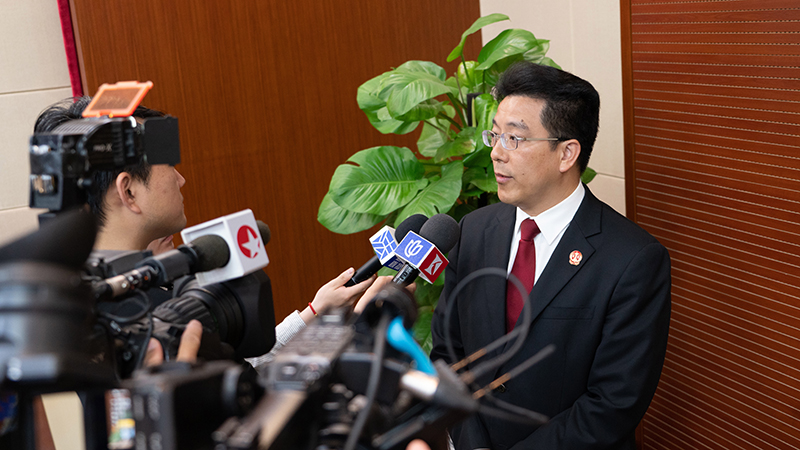
On May 26, 2021, the eve of the International Children's Day, Shanghai First Intermediate People's Court held a press conference to release the white paper on judicial protection of minors in marriage and family disputes, report relevant trials in recent years and issue eight typical cases. Sun Jun, Vice President of Shanghai First Intermediate People's Court, briefed the relevant situation. KNEWS, Channel Law and itouch TV broadcast the press conference live.
From January 1, 2018 to December 31, 2020, Shanghai First Intermediate People's Court has concluded a total of 751 second-instance cases of minor-related marriage and family disputes, including 230 in 2018, 256 in 2019 and 265 in 2020, involving 834 minors, according to the white paper.
<!--[if !supportLineBreakNewLine]-->
<!--[endif]-->
Most cases are related to the ownership of the minor's direct custody, claim of support and right of visiting. Of the above-mentioned cases, 250 were settled by mediation and withdrawal, accounting for 33.29%, and the rate of mediation and withdrawal was much higher than other types of cases. Sun Jun pointed out that in terms of the effect, mediation and withdrawal are not only conducive to resolving the conflicts between parents on their children, but also conducive to their cooperation after divorce to raise minors and create a more favorable environment for their healthy growth.
As analyzed by the white paper, cases of marriage and family disputes involving minors have the following five characteristics. First, minors involved are becoming younger. According to statistics, minors aged 0-8 accounted for 70.7% of the total number of minors involved. Because they are too young to express their own opinions, parents are more likely to focus on their own interests and pay less attention to the protection of minors' legitimate rights and interests. Second, the proportion of minors living with their mothers is high. The white paper shows that 74.24% of minors involved live with their mothers as a result of the long-standing social and family habit in China that mothers have assumed more responsibility to raise their children. In addition, the Civil Code of the People's Republic of China ("Civil Code") stipulates that children under the age of 2 shall be brought up by their mothers in principle. On equal conditions, courts tend to place young children in the direct custody of their mothers. Third, the true will of minors are respected. Shanghai First Intermediate People's Court respected the true will of all the minors involved in 104 cases after listening to their wishes for direct custody. After the implementation of the Civil Code, the will of minors over age 8 should be respected in the handling of fostering relationship. Therefore, from children-based perspective, the courts should try their best to satisfy the will of minors without other adverse effects. Fourth, the amount of support adjudicated is on the rise. Data showed that the number of supports less than 1,000 yuan dropped significantly over the past three years, with only 16.4% minors involved, while the number of supports between 1,000 yuan and 5,000 yuan showed an overall upward trend. This is closely related to the higher social and economic level, parents' new consumption concept for their children and change of minors' demand in all aspects. Fifth, arrears for support are still prominent. Among all the concluded cases concerning fostering disputes, 56.14 %involved requests for supplementary supports or additional education fees. The reason why support arrears account for a relatively high proportion is that the party who needs to pay the support costs relates the support with dismemberment of property or right of visiting, or revenges on the other party.
At the press conference, an original promotional cartoon video of Shanghai First Intermediate People's Court was broadcast, which shows three common situations involving minors in marriage and family disputes, reflects the court's innovation and explorations in judicial philosophy and trial mechanisms for protecting minors' rights and interests in such disputes, and calls on attention of the whole society to the protection of minors in marriage and family disputes.
Guo Haiyun, Chief Judge of the Juvenile and Family Division of Shanghai First Intermediate People's Court, briefed the typical cases on judicial protection of minors in marriage and family disputes. Eight typical cases in the white paper mainly involve disputes over custody rights, children's support and right of visiting, cover the hot issues of public concern, focus on protecting the interests of minors, and guide parents to form correct concept and expectations of litigation.
In order to resolve family conflicts to the maximum extent and safeguard the legitimate rights and interests of minors in marriage and family disputes, Shanghai First Intermediate People's Court has taken many measures on the principle of "positivity, priority, affinity and care". First, change the judicial philosophy and highlight protection. The court has attached great importance to the identity-related interests, personality interests and privacy of minors during the trials, paid attention to parental education in pretrial mediation, court hearing and post-judgment return visit, and stressed family morality in the judicial documents. Second, enhance specialization and improve the trial quality and efficiency. The court has set up round-table tribunal, family mediation office and psychological counseling room to provide solid support for "flexible justice", strengthened the judges' judicial ability and mass work ability, expanded their knowledge in sociology, pedagogy, psychology, etc, constantly clarified and refined through various ways the methods and standards for application of laws in similar cases to promote the uniform application of laws. Third, resolve the disputes in diversified ways with cases closed at the same time. On the basis of full-process mediation in family cases involving minors, the court signed cooperation agreements with social organization to strengthen the ability of family affair investigation. It also formulated the Procedure for Psychological Intervention in Juvenile and Family Cases, set up psychological counseling rooms, and signed agreements with professional psychological counseling agencies to assist judges in judging the psychological status and true will of minors involved. Fourth, strengthen the linkage of institutions and expand the extension of trials. The court cooperated with Shanghai Women's Federation to publicize the law to the masses, established a regular communication mechanism with social work organizations and entrusted social workers to provide regular care for children and families in difficulties, formulated the Procedure for Return Visits Following Closure of Juvenile and Family Cases to carry out targeted return visits, learn about and evaluate the parent-child relationship and performance of effective judgments, and pushed relevant articles on minor protection through various news media.
Sun Jun said that Shanghai First Intermediate People's Court will continue to, relying on its judicial work, constantly update the judicial philosophy for family cases, innovate the trial mechanisms and methods, integrate and utilize various social resources to resolve family conflicts to the maximum extent, and strive to heal the psychic trauma of minors involved to promote their healthy growth.
 <!--[endif]-->White Paper of Shanghai First Intermediate People's Court on Judicial Protection of Minors in Marriage and Family Disputes.pdf
