
 Your current location >> Picture News
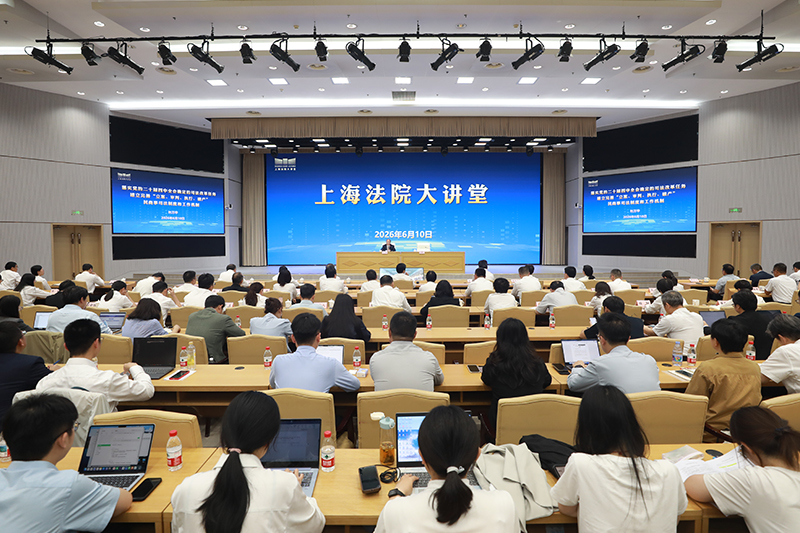
On the afternoon of June 10, the Shanghai
High People’s Court (SHPC) hosted the tenth session of the Shanghai Court
Lecture series. Justice (Second Rank) Du Wanhua, former Deputy Director and
Secretary-General of the Advisory Committee of the Supreme People’s Court (SPC)
and former vice-ministerial-level Standing Member of the SPC Adjudication
Committee, delivered a special lecture to court staff across the city under the
theme “Implementing the Judicial Reform Tasks Laid Down at the Fourth Plenary
Session of the 20th CPC Central Committee, Establishing and
Improving Civil and Commercial Judicial Systems and Working Mechanisms Covering
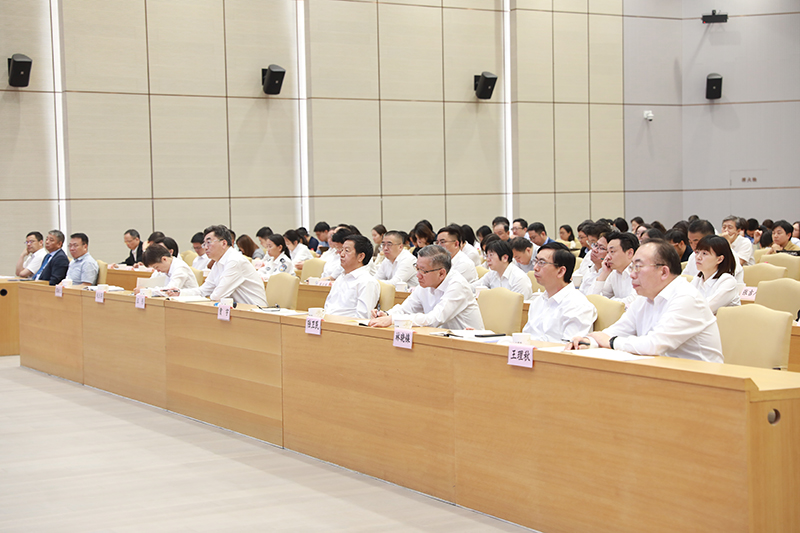
Case Filing, Adjudication, Enforcement, and Bankruptcy.” Jia Yu, Secretary of
the Party Leadership Group and President of the SHPC, was present at the event.
Also in attendance from the SHPC were members of the Party Leadership Group,
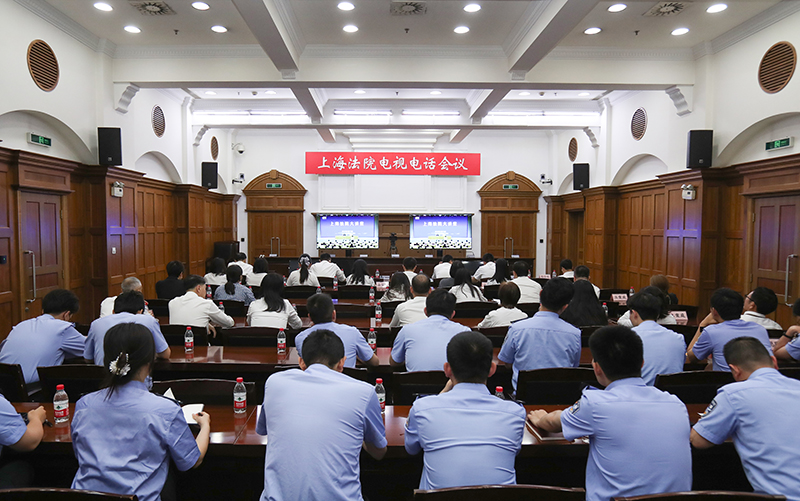
leading officials, and bureau-level cadres. Court staff across the city participated
at the main venue of the SHPC or via video links at the intermediate and
grassroots people’s courts as well as the Shanghai Judges Training Center.
Invited guests included selected representatives from the Shanghai People’s
Procuratorate, the Shanghai Bar Association, and the Shanghai Association of
Bankruptcy Administrators, together with faculty and students from Shanghai
Jiao Tong University.
Justice Du Wanhua, closely centering on
the judicial reform tasks laid down at the Fourth Plenary Session of the 20th
CPC Central Committee, systematically elaborated on the historical evolution,
functional positioning, practical foundations, and achievements of China’s
current working mechanisms for civil and commercial judicial work. He provided
a precise analysis of the existing shortcomings in the operation of such
mechanisms and specified concrete pathways and practical directions for
establishing and improving the bankruptcy protection system and for addressing
the weaknesses in the civil and commercial judicial systems and working
mechanisms. This lecture provided court staff across the city with theoretical
guidance and practical compliance for anchoring the reform objectives, deeply
grasping the operational rules of civil and commercial judicial work, improving
the quality and efficiency of civil and commercial judicial adjudication, and
advancing the modernization of civil and commercial judicial work.
Courts across the city will continue to
follow the work guideline of “political building as the guide, judicial quality
and efficiency as the foundation, and digital reform as the empowering force.”
Centering on the work requirements of “solving difficult problems, building
distinctive brands, and setting an example,” they will take targeted measures
to deliver tangible results and strive to usher in a new landscape for court
work in Shanghai.
>> Chinese Version
