
 Your current location >> Picture News

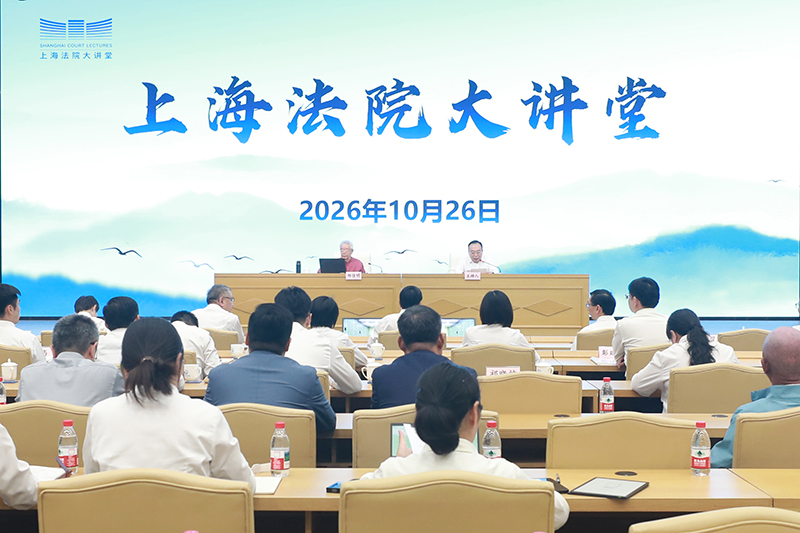
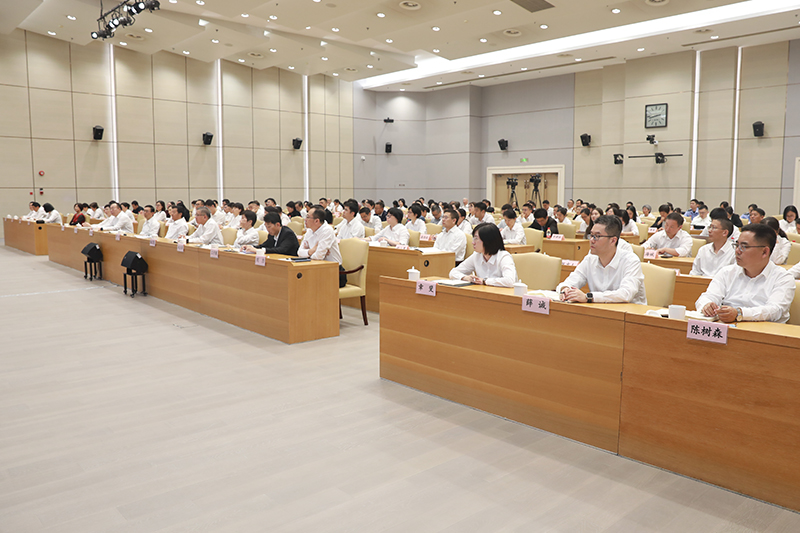
On the morning of
October 26, the Shanghai High People’s Court held the 12th session
of the “Shanghai Court Lectures,” inviting Zheng Jiaming, a member of the Hunan
Provincial Research Institute of Culture and History and a professor at Hunan
Normal University, to deliver a special lecture entitled “Fine Traditional
Chinese Culture and the Humanistic Cultivation of Court Personnel” for court
personnel across Shanghai. Jia Yu, Secretary of the Party Leadership Group and
President of the Shanghai High People’s Court, attended the event. Also in
attendance were members of the Court’s Party leadership group, other court
leaders, and bureau-level officials, along with representatives from the
Shanghai Municipal People’s Procuratorate and the Shanghai Bar Association. Additionally,
court personnel across Shanghai joined the lecture either at the main venue of
the Shanghai High People’s Court or at video conference venues in intermediate
and primary-level courts.
Professor Zheng
traced the connotations, framework, and core tenets of fine traditional Chinese
culture. He explained in depth its contemporary significance for strengthening
cultural confidence, enhancing judicial capacity, cultivating sound judicial conduct,
and fostering consensus on the rule of law. He also highlighted the ideas and
values inherent in fine traditional Chinese culture and the profound spiritual
resources they provide for contemporary judicial work.
The lecture
represents a concrete step by Shanghai courts to implement the guidance of
Zhang Jun, President of the Supreme People’s Court, on raising the levels of political integrity and professional
competence and ethics of court staff, and to strengthen
the foundation of team building so that Shanghai courts can continue to take
the lead and set an example nationwide. Courts across Shanghai will further
implement the requirements of adapting the basic tenets of Marxism to
China’s realities and its fine traditional culture,
advance the integrated development of political integrity and
professional competence and ethics, and incorporate the
values embodied in fine traditional Chinese culture into every stage of case
handling, with a view to achieving effective dispute resolution, smooth
governance, and social harmony.
>> Chinese Version
